Daily Ayurvedic Routine (Dinacharya): 12 Morning Habits for Better Energy, Digestion & Overall Wellness
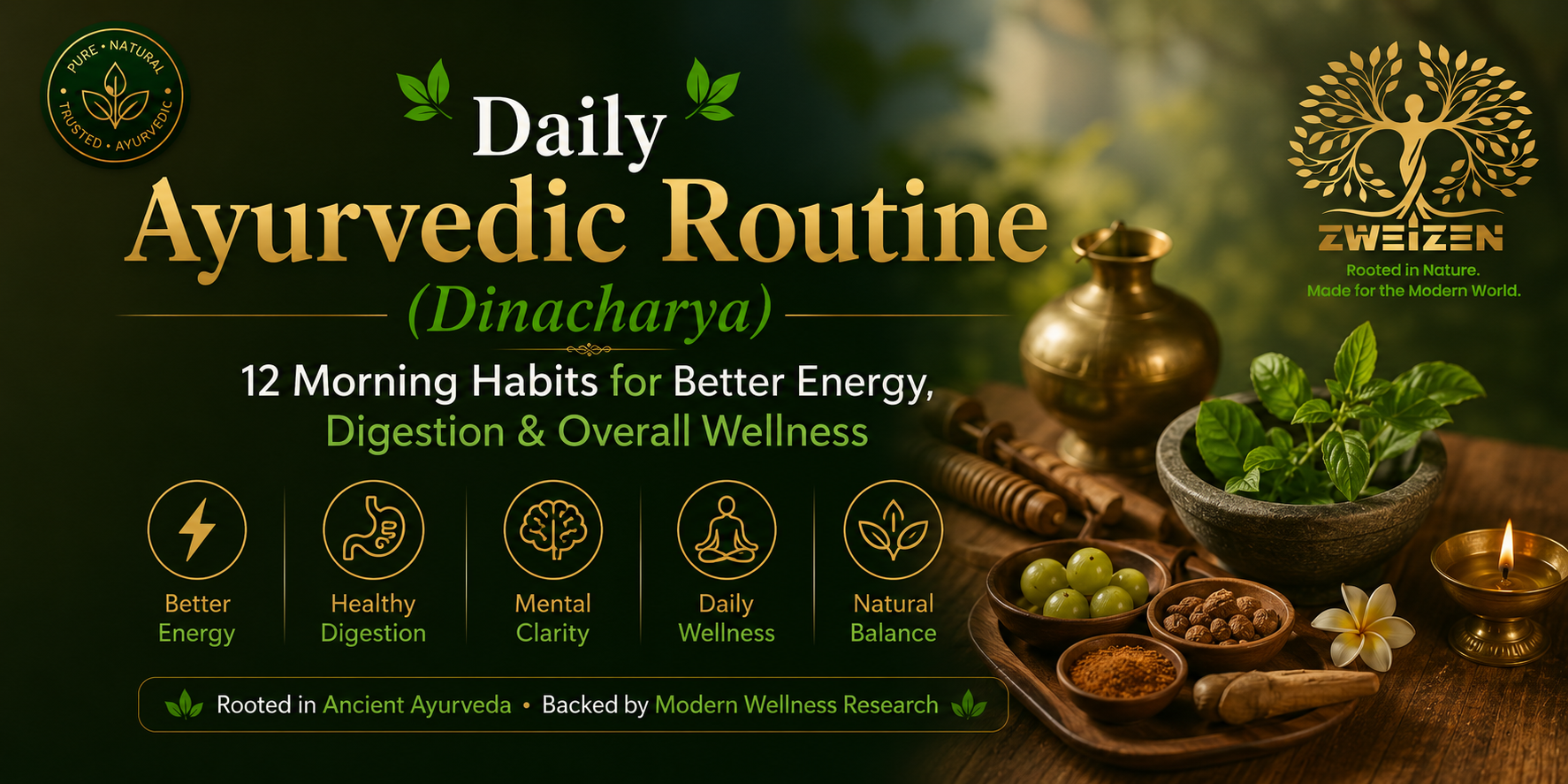
Daily Ayurvedic Routine (Dinacharya): 12 Morning Habits for Better Energy, Digestion & Overall Wellness
Quick Summary
Dinacharya is the traditional Ayurvedic daily routine that focuses on creating healthy habits from the moment you wake up.
In this guide you'll learn
✔ What Dinacharya means
✔ Why Ayurveda emphasizes morning routines
✔ Modern scientific evidence supporting healthy daily habits
✔ 12 practical morning habits
✔ Common mistakes to avoid
✔ Frequently Asked Questions
✔ How NutraZen and DetoxZen complement a healthy lifestyle
Reading Time
Approximately 15 minutes
Table of Contents
- What is Dinacharya?
- Why Daily Routine Matters
- Ayurveda and Circadian Rhythm
- Scientific Research
- Data Insights
- The 12 Morning Habits
- Common Morning Mistakes
- Daily Checklist
- NutraZen & DetoxZen
- Frequently Asked Questions
- About Zweizen
- References
Introduction
In today's fast-paced world, many people begin their day by checking notifications, skipping breakfast, rushing to work and managing constant stress. While these habits have become common, they often leave little room for mindful self-care.
More than 5,000 years ago, Ayurveda introduced a different perspective. Rather than waiting for illness to develop, Ayurveda encourages people to build health through consistent daily habits that support the body's natural rhythms.
This daily lifestyle practice is called Dinacharya.
Instead of focusing on quick fixes, Dinacharya teaches that small actions performed consistently each day may contribute to better digestion, sustained energy, mental clarity and overall well-being.
Today, many of these principles are also reflected in modern research on circadian biology, sleep science, nutrition, physical activity and stress management.
Whether you are new to Ayurveda or simply looking to improve your morning routine, this guide explains how traditional wisdom and modern science can work together to support healthier living.
What is Dinacharya?
The Sanskrit word Dinacharya combines two words:
Dina meaning "day"
Charya meaning "conduct" or "routine."
Together, Dinacharya means:
Following a structured daily routine that supports physical, mental and emotional balance.
Classical Ayurvedic texts such as the Charaka Samhita, Sushruta Samhita and Ashtanga Hridaya describe Dinacharya as one of the foundations of preventive healthcare.
Unlike treatment-focused approaches, Dinacharya emphasizes maintaining health before disease develops.
The traditional routine includes practices such as:
- Waking before sunrise
- Drinking water
- Oral hygiene
- Tongue cleaning
- Oil pulling
- Yoga
- Breathing exercises
- Meditation
- Balanced meals
- Proper sleep
Although lifestyles have changed over time, many of these habits remain practical and relevant today.
Why Does Ayurveda Emphasize Daily Routine?
Ayurveda teaches that the human body functions best when it follows the natural cycles of the day.
According to Ayurvedic philosophy, maintaining consistent daily habits may help support:
- Healthy digestion (Agni)
- Balanced Doshas
- Proper elimination
- Mental clarity
- Healthy sleep
- Physical vitality
- Emotional balance
Rather than relying on occasional wellness practices, Ayurveda encourages steady daily habits that become part of everyday life.
Dinacharya and Modern Science
Modern medicine also recognizes the importance of consistent daily routines.
Research into circadian rhythms shows that the body operates on an approximately 24-hour internal clock that regulates many essential biological processes.
These include:
- Sleep-wake cycles
- Hormone production
- Digestive function
- Body temperature
- Metabolism
- Cognitive performance
Disruptions to these rhythms have been associated with poorer sleep quality, reduced alertness and metabolic changes.
Research
National Center for Biotechnology Information
https://www.ncbi.nlm.nih.gov/books/NBK519507/
Data Insight
Your Gut Contains Trillions of Microorganisms
The digestive tract contains trillions of microorganisms collectively known as the gut microbiome.
These microorganisms help support:
- Digestion
- Nutrient metabolism
- Vitamin production
- Immune interactions
Modern research continues to explore the relationship between gut health and overall well-being.
Research
https://www.ncbi.nlm.nih.gov/pmc/articles/PMC5641835/
Morning Sunlight Helps Regulate Your Body Clock
Exposure to natural light shortly after waking helps synchronize circadian rhythms.
Healthy circadian rhythms influence:
- Sleep quality
- Alertness
- Hormone regulation
- Daily energy
Research
https://www.ncbi.nlm.nih.gov/books/NBK519507/
Gut Health and Immunity
Research indicates that a significant proportion of immune activity is associated with the gastrointestinal tract, highlighting the importance of digestive wellness as part of overall health.
Research
https://www.ncbi.nlm.nih.gov/pmc/articles/PMC3337124/
Why Morning Habits Matter
The first hour after waking often influences the rest of the day.
Healthy morning habits may help support:
✔ Better focus
✔ Improved productivity
✔ Healthy digestion
✔ Daily energy
✔ Emotional balance
✔ Healthy metabolism
Ayurveda encourages gradual improvement rather than perfection. Even adopting one or two consistent habits can be a meaningful first step.
Did You Know?
- The human body follows a natural biological clock known as the circadian rhythm.
- Consistent sleep and wake times help support this rhythm.
- Morning light is one of the strongest natural signals for regulating the body's internal clock.
- Ayurveda described structured daily routines thousands of years before circadian biology became a field of scientific research.
What You'll Learn Next
In the next section, we'll explore the 12 Morning Habits of Dinacharya, including:
- Wake During Brahma Muhurta
- Drink Water Mindfully
- Tongue Cleaning (Jihwa Nirlekhana)
- Oil Pulling (Gandusha)
- Gentle Yoga & Stretching
- Pranayama
- Meditation
- Abhyanga (Self-Massage)
- Bathing
- Nourishing Breakfast
- Morning Sunlight
- Planning the Day
Each habit will include:
- Ayurvedic explanation
- Classical Ayurvedic references
- Modern scientific evidence
- Data insights
- Practical implementation
- Common mistakes
- Expert tips
The 12 Morning Habits of Dinacharya
Ayurveda teaches that health is built through consistent daily actions rather than occasional efforts. The following habits are traditionally recommended as part of Dinacharya and can be adapted to modern lifestyles.
1. Wake During Brahma Muhurta
What is Brahma Muhurta?
Brahma Muhurta is the period approximately 1 hour 30 minutes to 48 minutes before sunrise. Classical Ayurvedic texts describe this as an ideal time for waking because the environment is calm, the mind is clear and the body is naturally prepared for the day.
According to the Ashtanga Hridaya, healthy individuals are encouraged to rise during Brahma Muhurta to support longevity and well-being.
Ayurvedic Perspective
Benefits traditionally associated with waking early include:
- Mental clarity
- Better concentration
- Balanced Doshas
- Digestive preparedness
- Increased productivity
- Emotional stability
Modern Research
Research in circadian biology suggests that maintaining a consistent wake-up time helps regulate the body's internal clock, improving sleep quality, alertness and metabolic regulation.
Reference:
https://www.ncbi.nlm.nih.gov/books/NBK519507/
Practical Tips
- Sleep at a consistent time.
- Wake gradually instead of using multiple alarms.
- Avoid checking your phone immediately after waking.
- Open curtains to expose yourself to natural morning light.
Key Takeaway
Start your day with intention rather than urgency.
2. Drink Water After Waking
Hydration is one of the simplest habits recommended in many traditional wellness systems.
Ayurvedic Perspective
Warm or room-temperature water is traditionally consumed after waking to prepare the digestive system for the day.
Potential Benefits
- Supports hydration
- Helps replace fluids lost overnight
- Supports normal digestive function
- Encourages healthy bowel habits
Modern Perspective
Adequate hydration contributes to:
- Normal digestion
- Circulation
- Temperature regulation
- Nutrient transport
The U.S. National Academies highlights hydration as an essential component of health.
Practical Tips
✔ Drink 1–2 glasses of water.
✔ Avoid excessive sugary drinks immediately after waking.
✔ Stay hydrated throughout the day.
Common Mistakes
- Drinking soft drinks first thing in the morning.
- Consuming excessive caffeine before hydrating.
Data Insight
The human body is approximately 50–60% water, depending on age, sex and body composition.
Hydration supports numerous physiological processes including circulation, digestion and temperature regulation.
3. Tongue Cleaning (Jihwa Nirlekhana)
Tongue cleaning has been described in classical Ayurvedic texts as part of daily oral hygiene.
Traditional Purpose
Ayurveda recommends removing the coating that accumulates on the tongue overnight.
Traditionally, tongue cleaning is associated with:
- Fresh breath
- Oral cleanliness
- Improved taste perception
- Daily hygiene
Modern Perspective
Studies have shown that tongue cleaning may help reduce oral debris and contribute to improved oral hygiene when combined with regular tooth brushing.
How to Practice
- Use a stainless steel or copper tongue scraper.
- Gently scrape from back to front.
- Rinse after each pass.
- Avoid excessive pressure.
Benefits
✔ Cleaner mouth
✔ Fresher breath
✔ Improved oral hygiene
4. Oil Pulling (Gandusha/Kavala)
Oil pulling is another traditional oral care practice in Ayurveda.
What is Oil Pulling?
It involves swishing edible oil, commonly sesame or coconut oil, around the mouth for several minutes before spitting it out.
Traditional Ayurvedic Uses
Oil pulling has traditionally been practiced for:
- Oral cleanliness
- Gum health
- Fresh breath
- Daily oral care
Scientific Perspective
Some studies suggest oil pulling may reduce plaque and improve oral hygiene when used alongside standard dental care. However, it should not replace brushing, flossing or professional dental advice.
Practical Tips
- Use approximately one tablespoon of edible oil.
- Swish gently for 5–10 minutes if comfortable.
- Spit into a bin (not the sink).
- Brush teeth afterwards.
5. Gentle Yoga and Stretching
Movement is an essential part of Dinacharya.
Ayurvedic Perspective
Gentle exercise helps prepare the body and mind for daily activities.
Ayurveda recommends avoiding overexertion, especially early in the morning.
Benefits
Traditional texts associate appropriate movement with:
- Flexibility
- Balanced energy
- Improved circulation
- Physical strength
Modern Research
Regular physical activity supports:
- Cardiovascular health
- Musculoskeletal function
- Mental well-being
- Healthy metabolism
The World Health Organization recommends adults engage in regular physical activity each week.
Simple Morning Routine
- Neck rotations
- Shoulder rolls
- Cat–Cow stretch
- Child's Pose
- Gentle Sun Salutations (Surya Namaskar)
Common Mistakes
❌ Exercising intensely immediately after waking without preparation.
❌ Skipping warm-up exercises.
Data Insight
The WHO estimates that 1 in 3 adults globally does not meet recommended physical activity levels.
Even light daily movement contributes to long-term health.
6. Pranayama and Meditation
One of the defining features of Dinacharya is beginning the day with calm, mindful breathing.
What is Pranayama?
Pranayama refers to controlled breathing techniques practiced in yoga traditions.
Common beginner practices include:
- Deep diaphragmatic breathing
- Anulom Vilom (Alternate Nostril Breathing)
- Bhramari (Humming Bee Breath)
Traditional Benefits
Ayurveda and yoga traditionally associate Pranayama with:
- Mental clarity
- Emotional balance
- Calmness
- Improved focus
Meditation
Meditation complements breathing practices by encouraging present-moment awareness.
Scientific Perspective
Research has explored meditation and breathing practices in relation to stress reduction, attention and emotional well-being.
Beginner Routine
- Sit comfortably.
- Breathe slowly for five minutes.
- Gradually extend the session to ten or fifteen minutes.
- Avoid distractions.
Quick Morning Routine Summary
| Habit | Time Required |
|---|---|
| Wake Early | 0 min |
| Hydration | 5 min |
| Tongue Cleaning | 2 min |
| Oil Pulling | 5–10 min |
| Yoga | 15 min |
| Pranayama | 10 min |
Total: Approximately 35–45 minutes, adjustable to your schedule.
Research Highlights
- Consistent wake times support circadian rhythm.
- Adequate hydration supports normal body functions.
- Regular physical activity contributes to long-term health.
- Meditation and breathing practices may support stress management and mental well-being.
- Good oral hygiene includes brushing and can be complemented by tongue cleaning.
7. Abhyanga (Self-Oil Massage)
What is Abhyanga?
Abhyanga is a traditional Ayurvedic self-massage using warm herbal or natural oils before bathing. Classical Ayurvedic texts describe it as an important part of Dinacharya that helps nourish the body and supports overall well-being.
Ayurvedic Perspective
According to Ayurveda, Abhyanga may help:
- Support skin nourishment
- Promote relaxation
- Balance Vata Dosha
- Improve comfort in joints and muscles
- Encourage a sense of calm
Sesame oil is traditionally recommended for many individuals, while other oils may be selected according to personal constitution and seasonal needs.
Modern Perspective
Massage therapy has been studied for its potential role in promoting relaxation, improving circulation and supporting overall well-being. While Abhyanga follows traditional Ayurvedic principles, regular self-massage can also encourage mindfulness and body awareness.
How to Practice
- Warm a small amount of oil.
- Massage gently using long strokes on the limbs and circular motions over the joints.
- Leave the oil on the skin for 10–20 minutes if comfortable.
- Follow with a warm bath or shower.
Key Takeaway
A few minutes of self-massage can become a calming part of your morning routine.
8. Take a Warm Bath
Bathing is more than a hygiene practice in Ayurveda; it is considered a way to refresh both body and mind.
Ayurvedic Perspective
A warm bath after Abhyanga helps remove excess oil, refresh the body and prepare for daily activities.
Traditional Benefits
- Supports cleanliness
- Refreshes the body
- Encourages alertness
- Complements morning self-care
Practical Tips
- Use warm rather than extremely hot water.
- Keep bathing products gentle on the skin.
- Moisturize if needed after bathing.
9. Eat a Nourishing Breakfast
Ayurveda encourages eating according to hunger, season and individual constitution. A balanced breakfast can provide energy for the day without feeling overly heavy.
Examples of Balanced Breakfasts
- Fresh fruits
- Oats
- Millet porridge
- Idli with sambar
- Vegetable poha
- Moong dal chilla
- Fresh nuts and seeds
- Yogurt (when appropriate)
Foods to Limit
- Deep-fried foods
- Excess sugar
- Highly processed snacks
- Sugar-sweetened beverages
Modern Perspective
A balanced breakfast containing fiber, protein and healthy fats can contribute to satiety and sustained energy throughout the morning.
Data Insight
Dietary fiber supports digestive health and contributes to a healthy gut microbiome. Fruits, vegetables, legumes and whole grains are valuable sources of fiber.
Research:
https://www.ncbi.nlm.nih.gov/pmc/articles/PMC7589116/
10. Get Morning Sunlight
Natural light is one of the strongest signals for regulating the body's circadian rhythm.
Benefits of Morning Sunlight
- Supports the sleep–wake cycle
- Encourages alertness
- Helps regulate biological rhythms
- Complements outdoor physical activity
Practical Tip
Aim for 10–20 minutes of natural daylight exposure in the morning, depending on weather and personal circumstances.
11. Plan Your Day Mindfully
Dinacharya is not only about physical habits—it also emphasizes mental organization.
Taking a few minutes each morning to plan your priorities can reduce unnecessary stress and improve productivity.
Simple Planning Method
- List the three most important tasks.
- Schedule breaks.
- Allocate time for meals and hydration.
- End the day with a realistic review rather than perfection.
12. Be Consistent Rather Than Perfect
The most valuable aspect of Dinacharya is consistency.
Rather than trying to follow every recommendation from day one, begin with one or two habits and gradually expand your routine.
Small improvements practiced every day often have a greater long-term impact than occasional intensive efforts.
Common Morning Routine Mistakes
Many people unintentionally begin the day with habits that may affect their productivity or well-being.
Common examples include:
- Going to bed very late
- Snoozing the alarm repeatedly
- Checking social media immediately after waking
- Skipping hydration
- Skipping breakfast
- Remaining sedentary all morning
- Spending little time outdoors
- Ignoring stress management
- Following an inconsistent sleep schedule
- Depending on highly processed convenience foods
Replacing these habits gradually with healthier alternatives can support a more balanced routine.
Daily Dinacharya Checklist
Use this checklist as a simple daily reminder.
☐ Wake up at a consistent time
☐ Drink water
☐ Clean your tongue
☐ Brush your teeth
☐ Practice oil pulling (optional)
☐ Gentle stretching or yoga
☐ Pranayama
☐ Meditation
☐ Self-massage (optional)
☐ Warm bath
☐ Balanced breakfast
☐ Morning sunlight
☐ Plan your day
☐ Stay hydrated
☐ Sleep on time
How NutraZen Supports a Healthy Lifestyle
Daily wellness begins with healthy habits. A balanced diet, regular movement, quality sleep and stress management remain the foundation of good health.
For individuals seeking additional nutritional support, Zweizen NutraZen Ayurvedic Wellness Supplement combines nutrient-rich botanicals, greens, herbs and berries inspired by traditional wellness principles.
NutraZen is designed to complement:
- Daily nutritional intake
- Active lifestyles
- Plant-based wellness routines
- Overall vitality
Learn more:
https://zweizen.com/product/nutrazen-ayurvedic-wellness-supplement
How DetoxZen Complements Digestive Wellness
Healthy digestion depends on multiple lifestyle factors, including diet, hydration, physical activity and regular daily routines.
Zweizen DetoxZen Advanced Formulation contains carefully selected botanicals inspired by Ayurvedic wellness traditions, including Amla, Guduchi, Milk Thistle, Manjistha, Curcumin and other plant-based ingredients.
When used as directed alongside a healthy lifestyle, DetoxZen can complement an overall wellness routine.
Learn more:
https://zweizen.com/product/detoxzen-advanced-formulation
About Zweizen
Zweizen is dedicated to combining traditional Ayurvedic wisdom with modern wellness principles. Through educational articles, transparent product information and thoughtfully formulated supplements, Zweizen aims to help individuals make informed lifestyle choices.
Learn more:
About Us
Why Choose Zweizen?
At Zweizen, we focus on quality, transparency and responsible wellness education.
Our approach includes:
- Thoughtfully selected botanical ingredients
- Modern manufacturing standards
- Educational wellness resources
- Transparent product information
- Customer-first philosophy
- Continuous improvement
- Long-term trust
Explore more:
https://zweizen.com/why-choose-zweizen
Press & Media
Stay updated with the latest company news, educational initiatives, announcements and media coverage.
https://zweizen.com/press-media
Frequently Asked Questions (FAQs)
1. What is Dinacharya in Ayurveda?
Dinacharya is the traditional Ayurvedic daily routine that encourages consistent habits such as waking early, maintaining oral hygiene, eating balanced meals, staying physically active and following regular sleep schedules to support overall well-being.
2. Why is Dinacharya important?
Ayurveda considers daily routine one of the foundations of preventive health. Consistent daily habits help support digestion, energy, mental clarity, emotional balance and healthy lifestyle practices.
3. What time should I wake up according to Ayurveda?
Classical Ayurvedic texts recommend waking during Brahma Muhurta, approximately 48–96 minutes before sunrise, when practical. If this is not possible, maintaining a consistent wake-up time is still beneficial.
4. Can beginners follow Dinacharya?
Yes. Begin with one or two habits such as waking at a regular time, drinking water after waking and incorporating light stretching. Gradually build your routine over time.
5. Is Dinacharya suitable for working professionals?
Absolutely. Dinacharya can be adapted to modern lifestyles by focusing on consistency rather than perfection.
6. Does Dinacharya improve digestion?
Ayurveda emphasizes healthy digestion (Agni) as a cornerstone of wellness. Habits such as regular meal timing, hydration and mindful eating support healthy digestive function as part of an overall healthy lifestyle.
7. Why is tongue cleaning recommended in Ayurveda?
Tongue cleaning (Jihwa Nirlekhana) is a traditional Ayurvedic oral hygiene practice that helps remove the coating that accumulates overnight and complements daily oral care.
8. Is oil pulling necessary every day?
Oil pulling (Gandusha or Kavala) is an optional traditional practice. It may be incorporated into a daily oral hygiene routine but should not replace brushing, flossing or regular dental care.
9. Should I exercise before breakfast?
Many people choose light exercise such as walking, yoga or stretching before breakfast. Individual preferences and health conditions vary, so choose an approach that is appropriate for you.
10. What should I eat for breakfast according to Ayurveda?
Ayurveda generally encourages fresh, balanced and minimally processed foods. Breakfast may include whole grains, fruits, vegetables, legumes or other nutrient-rich foods suited to individual needs.
11. How does morning sunlight support wellness?
Exposure to natural morning light helps regulate circadian rhythms, which influence sleep, alertness and hormonal cycles.
12. How long does it take to build a healthy morning routine?
Research suggests habit formation varies between individuals. Consistency over weeks and months is generally more important than attempting to change everything at once.
13. Can NutraZen be included in a daily wellness routine?
Yes. Zweizen NutraZen Ayurvedic Wellness Supplement is formulated to complement a balanced diet and healthy lifestyle. It is not intended to replace nutritious foods or medical care.
Learn more:
https://zweizen.com/product/nutrazen-ayurvedic-wellness-supplement
14. Can DetoxZen replace healthy eating?
No. Zweizen DetoxZen Advanced Formulation is designed to complement healthy eating, hydration and regular physical activity. It should not be used as a substitute for a balanced diet.
Learn more:
https://zweizen.com/product/detoxzen-advanced-formulation
15. Can Dinacharya help with stress management?
Traditional Dinacharya includes meditation, breathing exercises and mindful daily practices that may support emotional well-being and relaxation as part of a healthy lifestyle.
16. Can I customize Dinacharya?
Yes. Ayurveda recognizes that individuals differ. Your routine can be adapted according to age, work schedule, climate, season and personal preferences while maintaining healthy daily habits.
17. Is Dinacharya only for adults?
Many principles of Dinacharya, such as regular sleep, hydration, physical activity and balanced meals, are valuable for people of different ages. Individual routines should be appropriate for age and health status.
18. Where can I learn more about Ayurveda and wellness?
Explore educational articles published by Zweizen covering Ayurvedic ingredients, nutrition, gut health, daily wellness and supplement education.
19. Why does Zweizen publish educational blogs?
Our goal is to help readers understand Ayurvedic wellness concepts through responsible, research-informed educational content that supports informed lifestyle decisions.
20. Where can I learn more about Zweizen?
Explore:
About Zweizen
Why Choose Zweizen
https://zweizen.com/why-choose-zweizen
Press & Media
https://zweizen.com/press-media
Related Articles
Continue your wellness journey with these guides:
- Top 15 Ayurvedic Superfoods for Daily Energy, Immunity & Overall Wellness
- Ayurvedic Detox Explained: 10 Powerful Botanicals for Gut Health, Daily Cleansing & Wellness Support
- Amla in Ayurveda: Traditional Uses, Nutrition & Modern Research
- Ashwagandha in Ayurveda: Benefits & Scientific Insights
- Alfalfa in Ayurveda: Nutrition & Wellness Support
- Acai Berry in Ayurveda: Antioxidant-Rich Nutrition
Scientific References
Classical Ayurvedic Texts
- Charaka Samhita
- Sushruta Samhita
- Ashtanga Hridaya
Modern Research
-
National Center for Biotechnology Information (NCBI) – Circadian Rhythms
https://www.ncbi.nlm.nih.gov/books/NBK519507/ -
NCBI – Gut Microbiome and Human Health
https://www.ncbi.nlm.nih.gov/pmc/articles/PMC5641835/ -
NCBI – Gut Health and Immunity
https://www.ncbi.nlm.nih.gov/pmc/articles/PMC3337124/ -
NCBI – Dietary Fiber and Gut Health
https://www.ncbi.nlm.nih.gov/pmc/articles/PMC7589116/ -
World Health Organization (WHO) – Physical Activity Guidelines
https://www.who.int/news-room/fact-sheets/detail/physical-activity
Reviewed by Zweizen Editorial Team
This article has been reviewed by the Zweizen Editorial Team to ensure consistency with established Ayurvedic principles, publicly available scientific literature and responsible wellness communication.
The content is intended for educational purposes and is periodically updated to reflect current evidence and best practices.
Final Thoughts
Ayurveda reminds us that lasting wellness is not built through occasional efforts but through consistent daily habits. Dinacharya provides a practical framework for creating a healthier lifestyle by emphasizing regular sleep, balanced nutrition, movement, mindfulness and self-care.
Modern scientific research increasingly supports many of these principles, particularly the importance of circadian rhythms, physical activity, hydration, stress management and digestive health. While every individual's routine will differ, adopting even a few of these habits can be a meaningful step toward improved daily well-being.
Healthy living is a journey. Start with one habit, remain consistent and build your routine over time.
About Zweizen
Zweizen is committed to combining traditional Ayurvedic wisdom with modern wellness principles. Through educational content, carefully formulated botanical supplements and a focus on transparency, we aim to help individuals make informed choices for long-term well-being.
Explore More
- About Us: https://zweizen.com/about
- Why Choose Zweizen: https://zweizen.com/why-choose-zweizen
- Press & Media: https://zweizen.com/press-media
Our Products
NutraZen – Ayurvedic Wellness Supplement
https://zweizen.com/product/nutrazen-ayurvedic-wellness-supplement
DetoxZen – Advanced Formulation
https://zweizen.com/product/detoxzen-advanced-formulation
Disclaimer
This article is intended for educational and informational purposes only. It is not intended to diagnose, treat, cure or prevent any disease, nor should it be considered a substitute for professional medical advice. Always consult a qualified healthcare professional before making significant changes to your diet, lifestyle or supplement routine, especially if you are pregnant, breastfeeding, taking medication or managing a medical condition.
Recent Posts

The Wellness Industry Doesn’t Have a Product Problem. It Has a Trust Problem. | Zweizen


The Future of Preventive Healthcare: Why Daily Wellness, Nutrition & Lifestyle Matter More Than Ever

How to Choose a High-Quality Ayurvedic Supplement: 15 Things Every Buyer Should Check
Daily Ayurvedic Routine (Dinacharya): 12 Morning Habits for Better Energy, Digestion & Overall Wellness

How Mindfulness Supports Physical Health: The Mind-Body Connection Explained

Natural Detox Myths vs Facts: What Your Body Really Needs for Effective Cleansing

Ayurvedic Detox Explained: 10 Powerful Botanicals for Gut Health, Daily Cleansing & Wellness Support

Top 15 Ayurvedic Superfoods for Daily Energy, Immunity & Overall Wellness
About Zweizen Private Limited